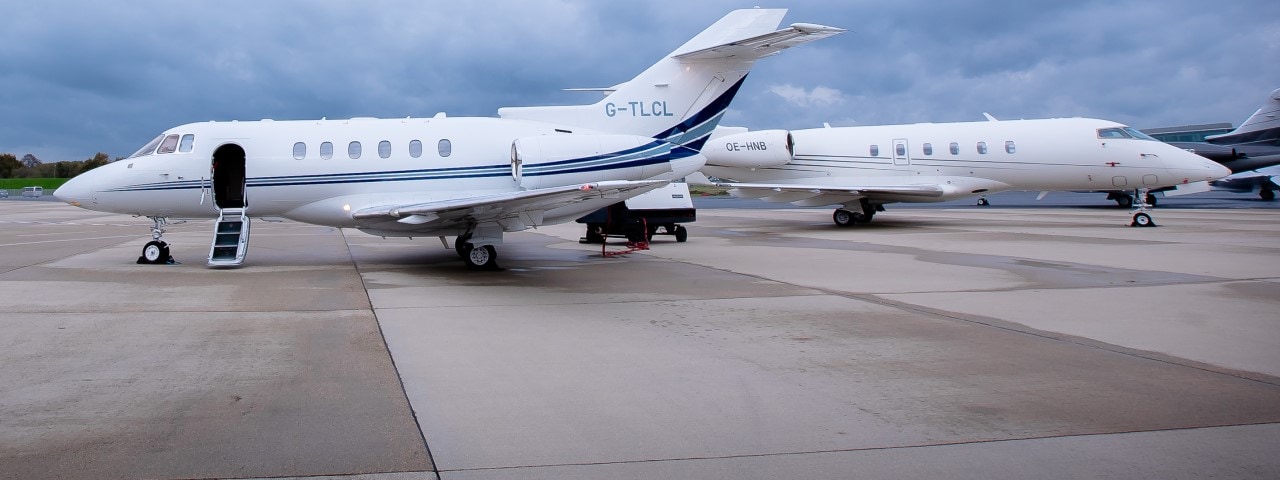
 With so many aircraft available, choosing a private jet largely depends on your priorities, whether these are range, cabin size, speed, age, or comfort. ACS compares all key factors and offers bespoke private jet charter recommendations tailored to you.


How to choose a private jet
Whether you’re looking to buy or charter a private jet, with thousands of aircraft to choose from, it can be hard to pick the right one for you. Many factors can affect your final decision, but ultimately, it comes down to what matters to you most, whether that’s:
- The manufacturer’s reputation
- Cabin size, comfort and amenities
- Operational cost-efficiency
- Range
- Age
- Speed
As charter experts with offices on six continents, Air Charter Service (ACS) makes choosing a private jet as simple, straightforward, and stress-free as possible. When you inquire about a private jet charter with us, we’ll present a shortlist of the aircraft options that best suit your travel itinerary and preferences. And, with members of our global aircraft brokerage team available for assistance 24/7, you can count on expert guidance and responsive support at every stage of your journey.
Aircraft manufacturers
Many manufacturers have been delivering premium private jets for decades. Below is a summary of some of the best-known and most trusted brands that are often recommended through our charter network.
Beechcraft
Formerly known as Hawker Beechcraft, this American-based manufacturer specializes in small turboprops like the King Air family. The company was acquired by Textron Aviation Group (which also owns Cessna) in 2014.
Bombardier
Owner of Canadair and Learjet, Bombardier is one of the biggest players in the private aviation industry and offers a diverse range of aircraft for short, medium, and long-range flights. The heavy and ultra-long-range Challenger and Global lines are especially popular with buyers and charter customers alike, with the Global 8000 boasting one of the longest private jet ranges.
Cessna
Throughout the second half of the 20th century, Cessna was known as one of the largest private jet manufacturers in the world, producing some of the best very light and midsize jets in the industry. The Citation Excel is a best-selling midsize, while the Citation Longitude is a sought-after option in the super-midsize class.
Embraer
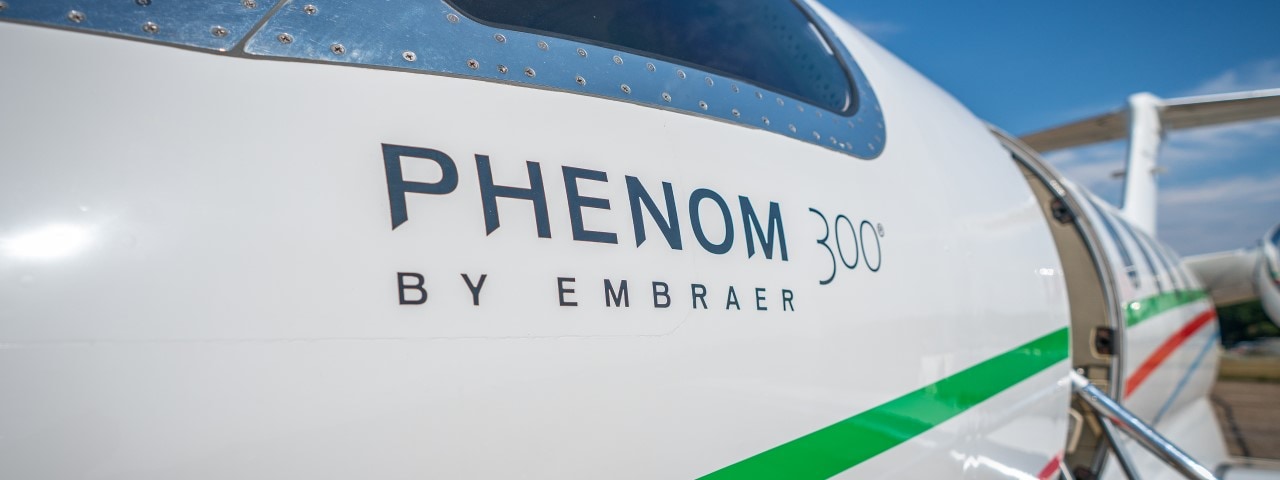
This Brazilian manufacturer specializes in agricultural, military, commercial, and private aircraft. Its business jets range from the very light Phenom 100 to the long-range Embraer Lineage 1000. The versatile Phenom 300 is a favorite amongst private jet users.
Dassault
Founded in 1929, the French manufacturer is renowned for producing several successful jets in the midsize to ultra-long categories. The midsize Falcon 20 was its first Falcon aircraft, and the Falcon 7X and the Falcon 8X are successful heavy jets.
Gulfstream
Gulfstream is an American business jet manufacturer whose aircraft are easily recognizable by their distinctive oval windows. Its larger planes, like the Gulfstream G550, compete with Bombardier in the heavy jet class.
Piaggio Aerospace
Headquartered in Italy, Piaggio Aerospace is one of the world’s oldest aircraft manufacturers. The brand is renowned for successful smaller planes like the P180 and P180 II.
Pilatus
Founded in 1939, Pilatus specializes in turboprops like the nine-passenger PC-12. The Swiss manufacturer also offers the PC-24 light business jet.
Cabin size, comfort, and amenities
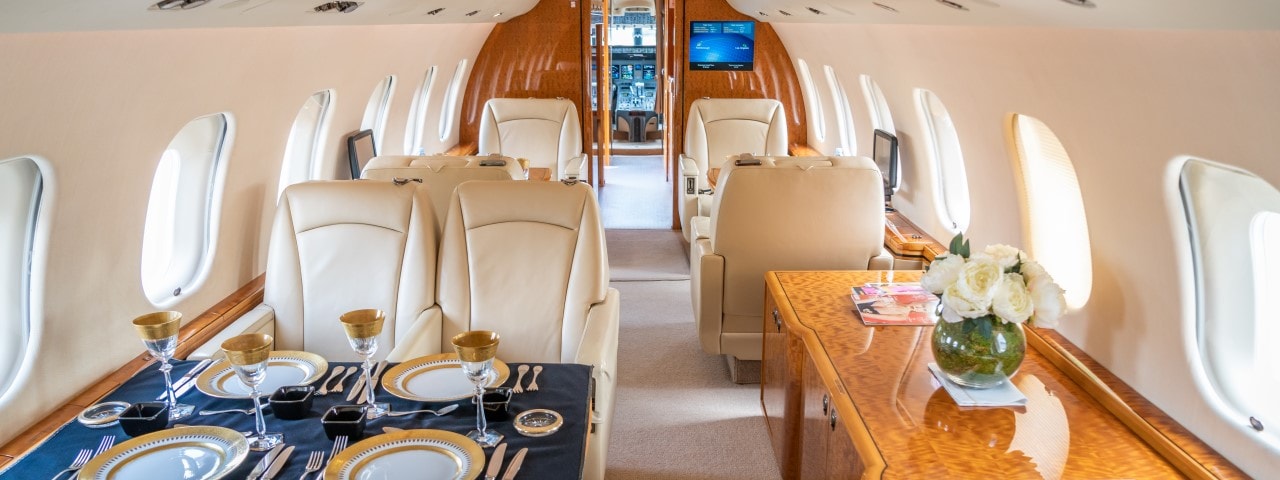
Cabin size is one of the most important considerations for anyone wondering how to choose a private jet. This single attribute will be affected by various factors, like the number of passengers a flight will need to accommodate, the level of comfort you expect on board, or the availability of specific features like private meeting rooms, in-flight entertainment systems, or even bedrooms for rest between your destinations.
Generally speaking, as you move up the aircraft weight classes, the more space and seats you’ll have. In ascending order of size, the categories are:
- Piston propellers
- Turboprops
- Very light jets
- Light jets
- Super light jets
- Midsize jets
- Super midsize jets
- Heavy jets
- Ultra-long-range heavy jets
- VIP executive airliners (bizjets)
The number of seats available in each class depends on the aircraft configuration.
There is a wide range of turboprops to choose from, but some of the larger turboprops are able to accommodate up to eight passengers. Very light jets are generally suitable for up to four passengers, while some light jets comfortably fly six passengers. This number increases to eight or nine in the midsize and super-midsize jet class, with heavy jets able to accommodate between eight and 12 passengers. Some aircraft in the ultra-long-range category can theoretically seat 18 passengers; however, we generally recommend a maximum of 14 for our charter customers. VIP executive airliners can seat 19 passengers, but some of these aircraft can accommodate far more.
Similarly to seats, the cabin’s size can vary between aircraft in the same weight class. For example, while a Bombardier Learjet 35 (light jet) has room for six passengers in a 12.9 ft-long cabin, upgrading to a Cessna Citation Bravo (also a light jet) means you can bring along an extra person because the cabin is slightly longer at 15.8 feet long. However, you’re unlikely to feel the difference unless you upgrade to a midsize jet like the Hawker Beechcraft 800XPI, with an interior size of 21 feet long. This aircraft is also designed to accommodate six passengers, but the cabin has a greater height and width, so it makes longer journeys a lot more comfortable.
If overall comfort and modern amenities matter more to you than onboard space when choosing a private jet, consider a newer aircraft like Bombardier’s Challenger 350or the Embraer Praetor 600. On the other hand, older, unrefurbished models like the Cessna Citation II can be a more cost-effective option for those who simply want to travel from point A to point B without all the bells and whistles.
However, there are exceptions to this rule. We delve into this further when we compare the differences between chartering an older aircraft versus a newer one.
Fuel economy
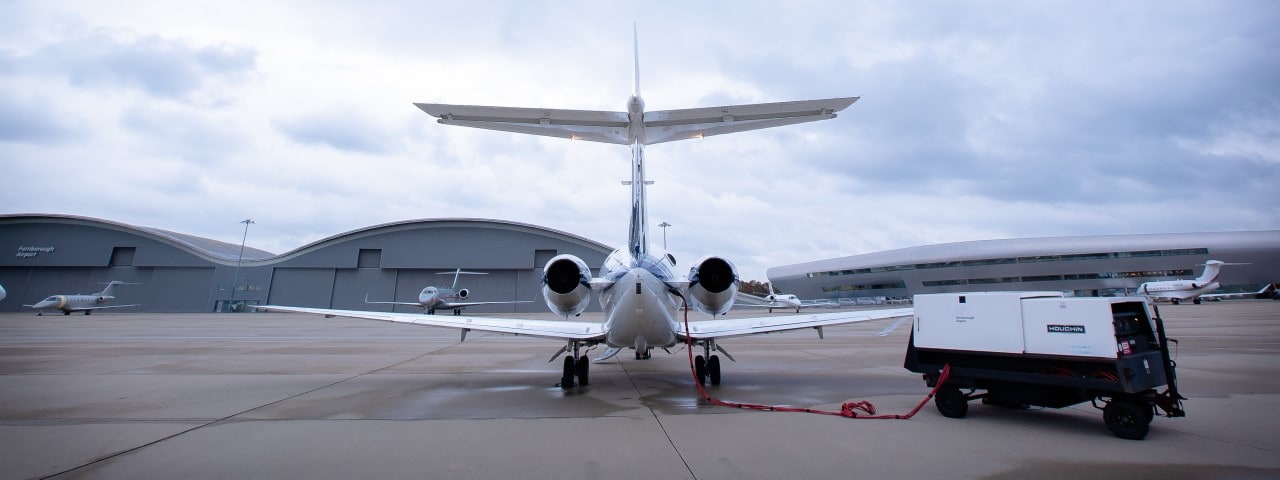
While an aircraft’s burn rate (how much fuel it burns during a flight) is most often seen as an operational cost for owning a private jet, it is also an important consideration when you’re considering chartering, as it influences the charter costs. The less fuel a jet consumes, the more cost-effective your flight could be.
Although there are also some general rules of thumb, smaller jets normally burn less fuel, and newer jets tend to outperform their older counterparts. For example, an aircraft’s fuel efficiency changes depending on a host of variables like speed and altitude, weather, take-off and landing, rates of climb, drag, the number of passengers and the amount of luggage.
The Embraer Phenom 100 is renowned for its comparatively low operating costs in the very light jet class, while the Bombardier Learjet 60XR is a surprisingly fuel-efficient midsize jet. Bombardier claims its Challenger 350 is the most cost-effective super-midsize jet to run, and the Challenger 850 heavy jet has the hourly cost, range, and flexibility of a much smaller jet.
Range
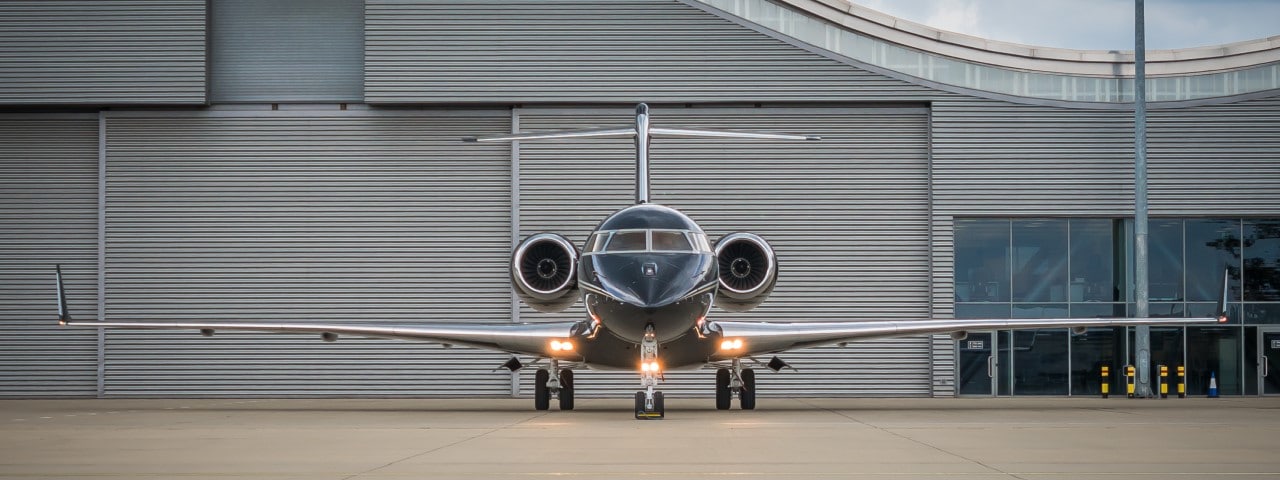
Flight range impacts how far you can travel nonstop, which is a key factor when selecting the best private jet for international or cross-continental trips. This is mainly because completing a journey with the fewest possible stops can impact the cost and flight time of your charter.
The distance an aircraft can travel is often determined by its size and the number of passengers on board, with heavier jets designed to cover greater distances than lighter ones. Bombardier dominates in the ultra-long-range and heavy jet category with the Global 8000 (7,900nm) and 7500 (7,700nm). Still, most ultra-long-range heavy jets, like the Gulfstream G650ER and Dassault Falcon 10X (both with ranges of 7,500nm), or even the Dassault Falcon 8X (6,450nm), can complete popular long-distance routes like Hong Kong to New York and Los Angeles to Sydney.
When you drop down to the midsize category, most jets have a range of 1,500-3,000nm with four passengers – a crucial consideration if you’re planning a 2,229nm trip from New York to San Francisco, for example. The Gulfstream G150 (3,000nm) can fly nonstop between most U.S. cities, while the Hawker 900XP (2,929nm) and Embraer Legacy 450 (2,963nm) are other midsize jets built to fly longer distances than their competitors.
Light jets tend to have a range of up to 1,800nm, even when they’re at full capacity. The Bombardier Learjet 36A is the outlier, flying four passengers non-stop for 2,550nm. Embraer’s Phenom 300 is also a popular long-range light jet that can transport seven passengers for 1,811nm, while the Dassault Falcon 10 with its 1,520nm range can easily connect city hubs with six passengers on board.
Age
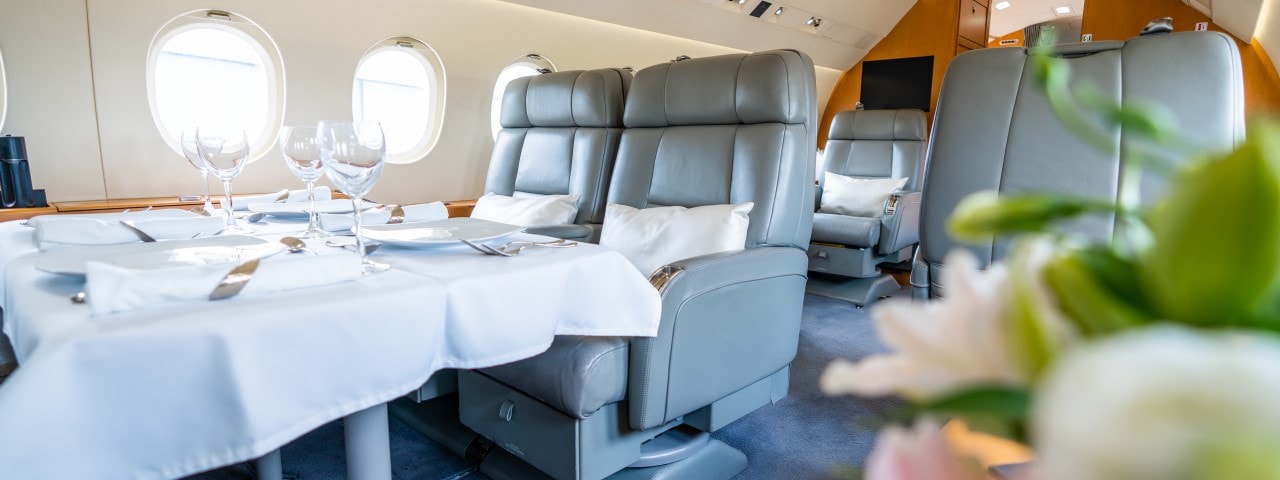
Age is not always indicative of quality, so newer isn’t always better when it comes to private jets, especially when you take into account personal preferences. Before weighing up any pros and cons, it’s important to note that aircraft inspection and maintenance criteria are very strict in the aviation industry. These rigorous global inspection standards mean that many older aircraft can still offer exceptional charter experiences, particularly when they've been refurbished. Most planes that have been removed from service have simply become too uneconomical to run, rather than there being an operational concern.
Newer aircraft may feature the latest engine designs, aerodynamics, and cabin systems, but the eye-watering cost of purchasing a brand-new private jet leads many operators and owners to opt for a cheaper, older model instead. They then use these savings to completely refurbish the inside of the aircraft with upgrades like new seats and paneling, and upgraded technology systems. They also invest in extra performance add-ons like hush kits and winglets that dramatically improve the performance of older aircraft.
Operators and owners will usually advertise these retrofitted aircraft for charter guests to enjoy, so don’t be concerned if your charter consultant recommends an older aircraft. Not only are they comfortable, but they can be cheaper to charter than newer ones. So, if the model you choose has been recently refurbished, you could save thousands while enjoying similar levels of luxury as you would on a brand-new private jet.
Speed
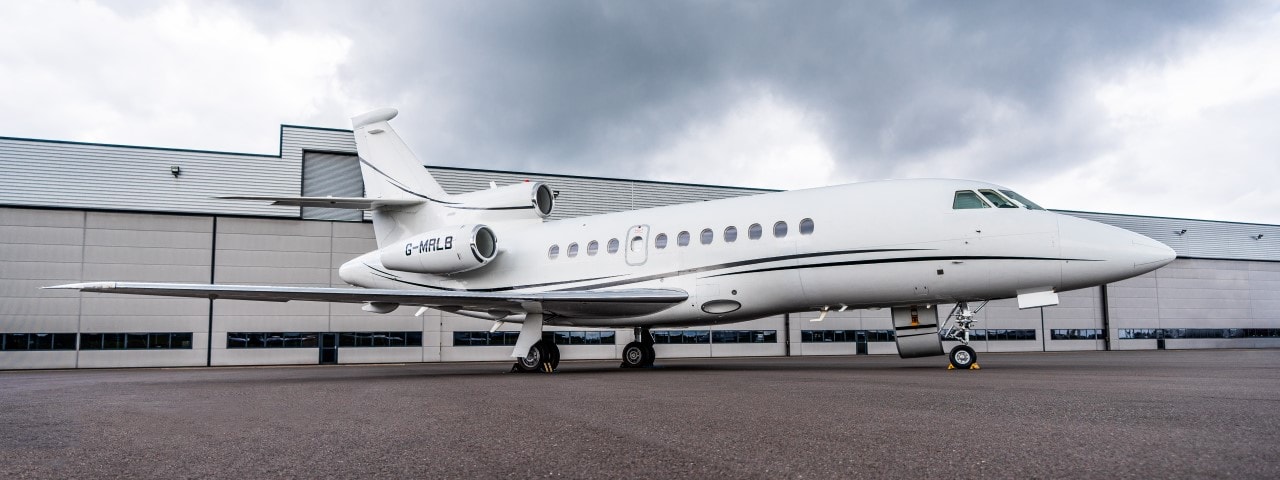
For time-sensitive trips, speed becomes a critical deciding factor in how to choose a private jet. While most private jet charter clients prioritize comfort and price, some are more concerned with reaching their destination as quickly as possible – after all, time is money.
Ultra-long-range heavy jets and heavy jets tend to be the fastest private jets in the world. The more powerful engines in this class can propel aircraft to speeds above 700 miles per hour (mph), although average cruising speeds are generally lower. Leading the way is Bombardier’s Global 8000, which is even faster at 720 mph. This is followed by the Gulfstream G700, which can reach speeds of 690 mph, just shy of breaking the sound barrier and going supersonic. Other incredibly fast heavy jets include the Dassault Falcon 7X and 8X, the Gulfstream G650 and G650ER, and Bombardier Global 7500.
Midsize jets can reach top cruising speeds of 470-530mph. While manufacturers are always jostling to produce the fastest plane in this class, the Cessna Citation X and Citation X+ are renowned as the fastest. These aircraft can reportedly reach speeds of up to 717mph, although average cruise speeds are much lower. When it comes to average cruise speed, the Dassault Falcon 20 is one of the quickest, with a max cruise speed of 552mph. The Gulfstream G100 and G150 are also incredibly quick at 529mph and 558mph, closely followed by the Embraer Legacy 450 at 528mph and the Hawker 750 at 514mph.
Light jets are designed for quick jaunts to nearby destinations, and most boast the speed to back this up. Most can exceed 450mph, with the Learjet 40 and 70 series renowned for their fast flight times. The majority of them can reach speeds above 450 miles per hour, with the Learjet 40 and 70 series renowned for their fast flight times. A Beechjet 400 (also known as a Hawker Beechcraft 400) is also an outlier in this class, with a maximum cruise speed of 539 mph. Despite launching back in 2006, the Cessna Citation CJ4 can cruise at 519 miles per hour and travel up to 2,169 nautical miles.
Pick the right private jet with ACS
Choosing the right aircraft can feel overwhelming, but it doesn’t have to be. Whether you’re focused on cabin size, comfort, operational efficiency, or performance, our team at ACS will recommend the best private jet options based on your unique needs. Explore our full range of private jet charter services and contact us for a personalized, no-obligation quote today.
For those prioritizing the journey experience as much as the aircraft itself, our dedicated team at The Travel Division at Air Charter Service can coordinate tailored in-flight services and ground arrangements as part of a seamless charter itinerary, making travel with a personalized private jet charter even easier.